

-
📌 Sample Preparation and Containment
<b data-start=”191″ data-end=”211″>🎯 <strong data-start=”198″ data-end=”211″>Objective
The main goal of sample reduction is to decrease <strong data-start=”261″ data-end=”278″>sample volume—not particle size—except in cases involving large pellets or cubes, which must be broken prior to reduction.
<b data-start=”389″ data-end=”414″>⚖️ <strong data-start=”396″ data-end=”414″>Why It Matters
Reducing and dividing a sample accurately is just as critical as obtaining it. According to Poundstone (1962), improper division post-sampling can introduce more error than the sampling process itself. Proper reduction ensures representativeness in:
<ul data-start=”665″ data-end=”725″>
<strong data-start=”667″ data-end=”685″>Working sample
<strong data-start=”688″ data-end=”708″>Retention sample
<strong data-start=”711″ data-end=”725″>Duplicates
<hr data-start=”727″ data-end=”730″>
<b data-start=”732″ data-end=”774″>⚙️ Sample Reduction Methods & Equipment
<b data-start=”776″ data-end=”817″>✅ <strong data-start=”782″ data-end=”817″>Preferred: Mechanical EquipmentMechanical dividers are more precise than manual methods and are strongly recommended.
<b data-start=”906″ data-end=”933″>📍 <strong data-start=”914″ data-end=”933″>Boerner Divider
<ul data-start=”934″ data-end=”1084″>
Standard for USDA grain grading.
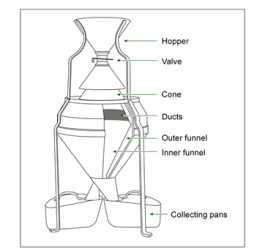
A hopper feeds grain onto a cone with 36 compartments.
Produces two equal parts using alternating compartments.
<b data-start=”1086″ data-end=”1111″>📍 <strong data-start=”1094″ data-end=”1111″>Cargo Divider
<ul data-start=”1112″ data-end=”1184″>
Gravity-operated.
Similar to Boerner; provides an equal 50/50 split.
<b data-start=”1186″ data-end=”1215″>📍 <strong data-start=”1194″ data-end=”1215″>Precision Divider
<ul data-start=”1216″ data-end=”1343″>
Electrically operated.
Uses a motor-driven disc for centrifugal mixing and even division.
Produces a precise 50/50 split.
<b data-start=”1345″ data-end=”1371″>📍 <strong data-start=”1353″ data-end=”1371″>Rotary Divider
<ul data-start=”1372″ data-end=”1472″>
Electrically operated.
Can divide into 10–12 parts.
Useful for creating 3–4 equal sub-samples.
<b data-start=”1474″ data-end=”1500″>📍 <strong data-start=”1482″ data-end=”1500″>Riffle Divider
<ul data-start=”1501″ data-end=”1755″>
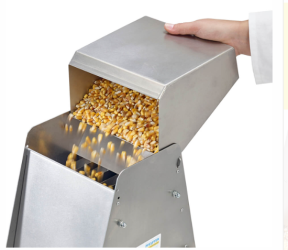
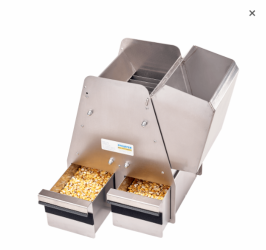
Preferred for feed ingredients and finished feeds.
Composed of a hopper over alternating chutes.
Comes in 8–24 chute models depending on particle size.
Offers greater precision and less variability than manual methods (Miles & Quackenbush, 1955).
<hr data-start=”1757″ data-end=”1760″>
<b data-start=”1762″ data-end=”1805″>🪵 Handling Large Pellets or Range Cubes
<ul data-start=”1807″ data-end=”1975″>
Cannot be used directly with riffle dividers.
Must be <strong data-start=”1865″ data-end=”1886″>crushed or ground prior to sample reduction.
If grinding is not an option, use <strong data-start=”1950″ data-end=”1964″>quartering carefully.
<hr data-start=”1977″ data-end=”1980″>
<b data-start=”1982″ data-end=”2012″>✋ Manual Method: Quartering
<ul data-start=”2014″ data-end=”2342″>
Used when equipment is unavailable or unsuitable.
Steps:
-
Mix sample thoroughly (rolling/mixing on paper or flat surface).
-
Divide into four quarters.
-
Select two opposite quarters.
-
Repeat until desired size is achieved.
Drawbacks:
<ul data-start=”2271″ data-end=”2342″>
Time-consuming
Labor-intensive
Greater risk of selection bias



Log in to reply.